How to build a fundraising hub for your charity
What should your fundraising hub include, and what does it really take to build and maintain one?
Explore the tools fundraisers and charity teams need, the work involved in creating them and an alternative to building everything from scratch.

How do you build a fundraising hub?
To build a fundraising hub, a charity needs to plan the fundraiser experience, provide access to useful resources, offer personalised fundraising materials and create ways for fundraisers to record their activity.
A more advanced fundraising hub may also include individual fundraiser accounts, event planning, checklists, team dashboards and messaging.
Charities can develop these features themselves or use a ready-made platform such as FundraizingHero.
What does a useful fundraising hub need?
A fundraising hub is more than a page of downloadable PDFs. It should give people a clear place to start fundraising, find what they need and return as their plans develop.
It should also help your team understand the activity fundraisers choose to share, without making every material request or update another administrative task.
Plan for the whole fundraising journey
Someone organising a coffee morning may need a venue, poster and safety guidance. Someone preparing for a sponsored run may need to register, train and share their challenge. A useful hub should support these different starting points.
People also need to come back: to find previous materials, update event details, work through tasks and contact the fundraising team.
Explore the fundraising journeyThe work behind a fundraising hub
A resource page can be relatively straightforward to create. A hub with accounts, personalised materials, saved fundraising plans and staff visibility is a much bigger project.
Design and user journeys
Plan navigation, forms, accessibility and the experience on mobile and desktop.
Development and testing
Build account access, data storage, event workflows, file handling and reliable PDF or image generation.
Privacy and security
Protect personal data, set staff permissions and maintain secure authentication and backups.
Branding and templates
Build and maintain editable templates, charity branding rules and printable outputs.
Hosting and maintenance
Pay for infrastructure, monitor reliability and keep software and dependencies updated.
Support and improvements
Fix issues, update resources, train staff and adapt the platform as fundraising needs change.
What does it cost to build a fundraising hub?
There isn't one meaningful price for every charity. A simple collection of resource pages costs far less than a custom platform with logins, event records, personalised templates and reporting.
When comparing options, consider the full cost of ownership, not just the initial development quote.
Discovery, design, development, testing, content setup and launch.
Hosting, storage, security updates, backups, bug fixes and accessibility improvements.
Managing content, maintaining templates, handling support and coordinating updates.
New functionality, integrations and changes to your charity's processes.
Build your own or use a ready-made fundraising hub?
Both approaches can work. The right choice depends on the experience you need, your budget and the technical resources available to your charity.
| Consideration | Build your own | Use FundraizingHero |
|---|---|---|
| Getting started | Plan, develop and test your chosen functionality. | Configure your branding, materials and hub settings. |
| Fundraising tools | Specify and build the tools you need. | Use built-in event planning, checklists, templates and resources. |
| Flexibility | Greater scope for bespoke workflows if you have the development budget. | Choose from the available settings, materials and Custom Events. |
| Maintenance | Arrange hosting, updates, security and technical support. | Platform maintenance is handled as part of the service; your team manages its own content. |
| Costs | Development costs plus ongoing maintenance and staff time. | A published monthly or yearly subscription, with a 30-day free trial. |
FundraizingHero is a fundraising support platform, not a replacement for your charity's donation processor or CRM. Check that its available features suit your requirements before subscribing.
Your charity's fundraising hub, without the development project
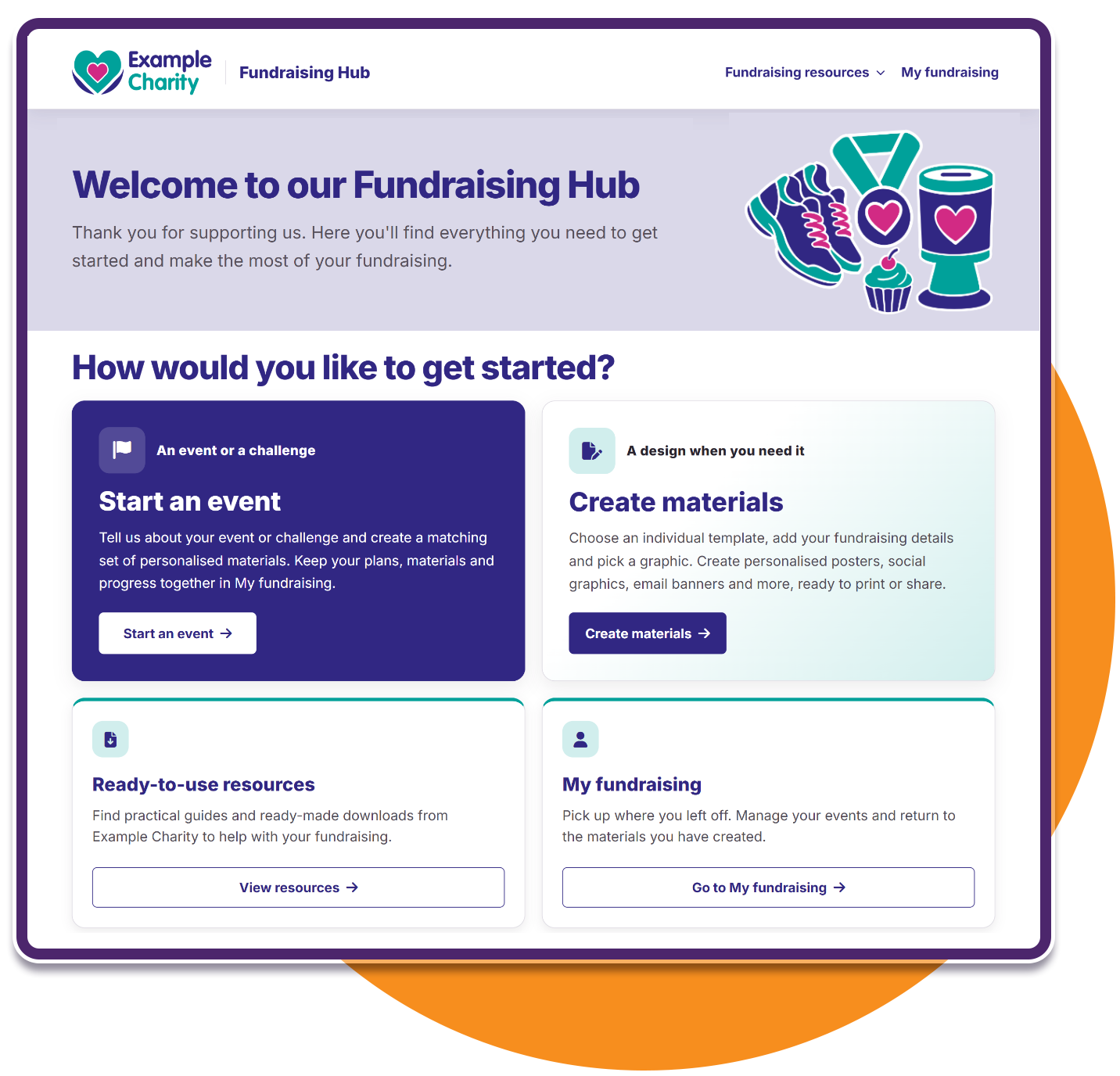
FundraizingHero brings together a branded fundraising hub, personalised templates, downloadable resources, event and challenge planning, practical checklists and an admin area for your fundraising team.
You choose the materials and resources to offer, add your branding and configure the experience for your charity. Fundraisers can get started and return to their activity, while your team can review the details and progress they share.
30-day free trial. No credit card required. View pricing.
Before you decide
Questions worth asking when planning a fundraising hub for your charity.