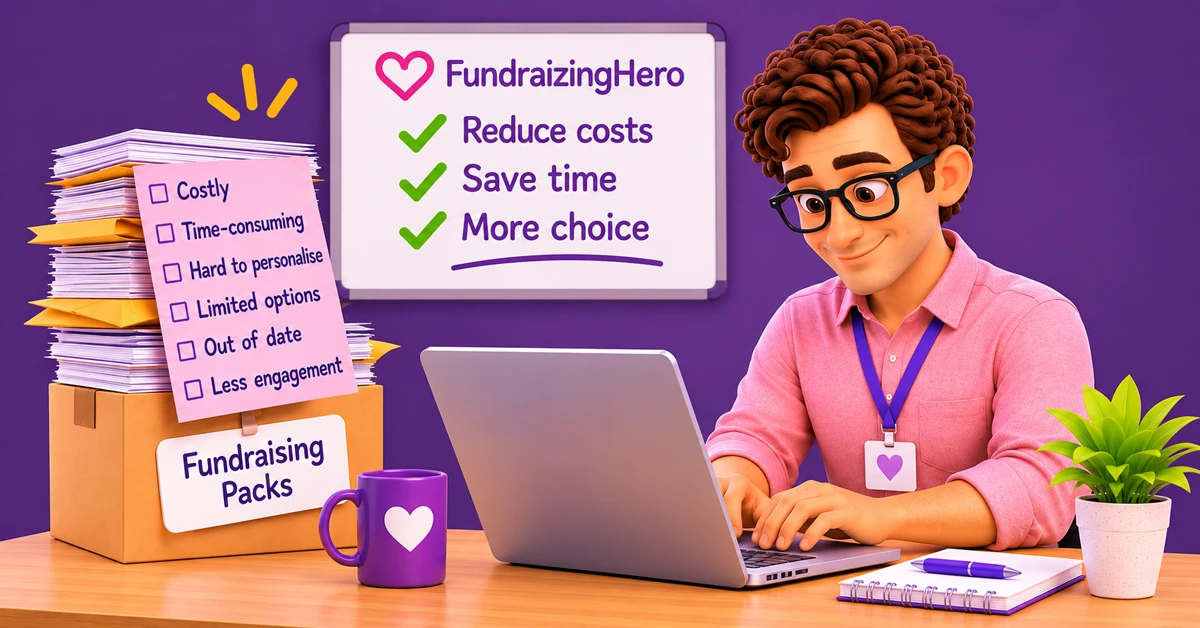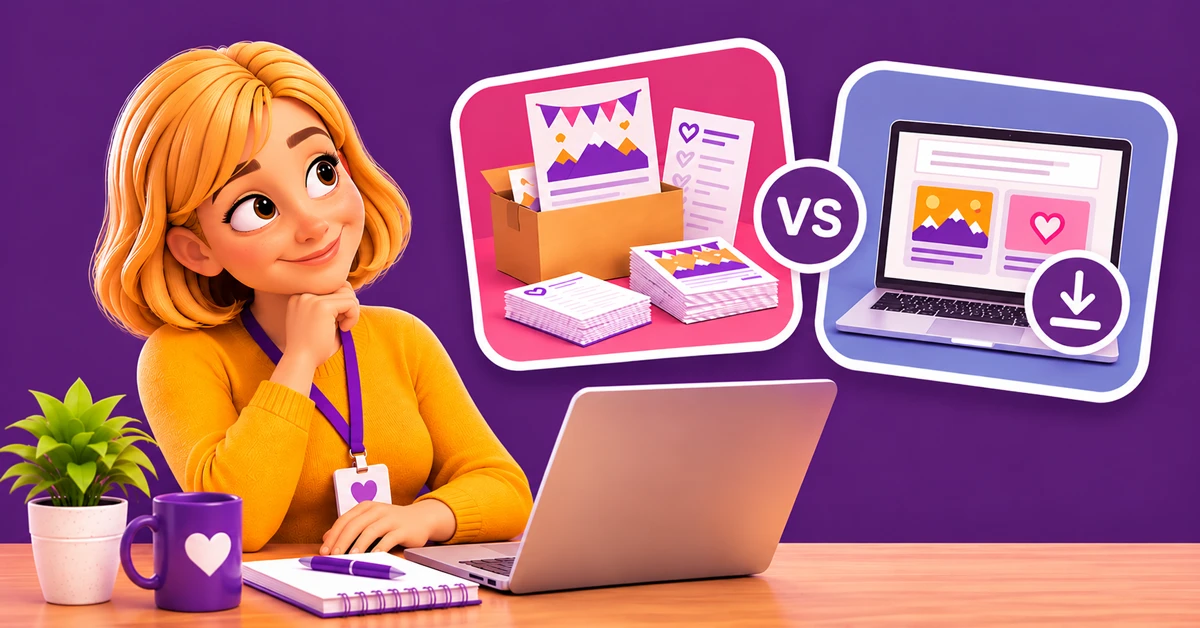
Physical fundraising packs deliver printed materials and tangible items to a supporter, usually by post or in person. Digital fundraising packs provide resources online for supporters to view, personalise, download or return to when needed.
Neither format is automatically better for every supporter or every resource. Digital packs work particularly well when someone needs materials quickly, wants to personalise them or may need to print more copies. Physical packs remain valuable when the item cannot be downloaded or when receiving something tangible improves the supporter’s experience.
For many charities, the practical answer is a blended approach: make useful digital resources available immediately, then provide selected physical items separately when they are relevant.
What is a physical fundraising pack?
A physical fundraising pack is a collection of printed resources and tangible items supplied to someone who is fundraising for a charity. It might be posted after a supporter registers, handed out at an event or collected from a charity office.
The contents could include printed posters, sponsorship forms, a fundraising guide, paying-in instructions, bunting or other paper resources. It may also contain items that cannot be downloaded, such as a T-shirt, running vest, collection bucket, wristband, banner or branded merchandise.
A physical pack can be a complete supporter welcome or a smaller parcel of items chosen for a particular activity. The important distinction is that the charity must prepare and physically fulfil it.
What is a digital fundraising pack?
A digital fundraising pack is an online collection of guidance, templates and downloadable resources that helps a supporter plan, promote and complete their fundraising.
It can be a single PDF, but it does not have to be. A more useful digital pack may organise resources by fundraising type or journey stage, offer editable fundraising templates, and let supporters return whenever they need another copy or updated information.
Depending on the platform, the charity may also be able to see which resources supporters create or download. This can help the fundraising team understand activity and offer timely personal support. Digital access should support the relationship, not replace it.
Advantages of physical fundraising packs
They can feel tangible and welcoming
Receiving a parcel can make a supporter feel recognised. A thoughtfully prepared welcome letter, event vest or small branded item can create a sense of belonging that is difficult to reproduce through a download alone.
They can include practical physical items
Some fundraising tools need to exist physically. A supporter cannot download a collection bucket or wear a digital T-shirt. Where these items are useful, sending or arranging collection of them is part of good supporter service.
They suit some accessibility preferences
Not every supporter wants to read guidance on a screen or has reliable internet and printing access. Some people find printed information easier to use, annotate or share. Offering a physical option can therefore make the journey more inclusive.
Limitations of physical fundraising packs
Physical fulfilment requires staff time or an external fulfilment process. Materials must be printed, stored, selected, packed and posted or made available for collection. These steps may be entirely worthwhile for high-value items, but they are less compelling when the supporter only needs a poster or a copy of a guide.
Delivery also introduces a gap between requesting and receiving resources. The length of that gap will depend on the charity’s process and delivery method, but it can matter when someone wants to begin promoting an activity straight away.
Printed quantities are fixed. If a supporter needs another sponsorship form or five extra posters, they may have to contact the team again or photocopy what they received. Printed guidance can also become outdated when contact details, processes or advice change.
Once a physical pack has been sent, the fulfilment itself provides limited insight into which resources were useful. The charity may know that the supporter requested a pack, but not what they later used or what stage their fundraising has reached.
Advantages of digital fundraising packs
Immediate, ongoing access
A digital pack can be available as soon as a supporter is ready. They can return later, download another copy and access updated guidance without waiting for another delivery.
Personalisation and repeat printing
Editable posters, sponsorship forms and social graphics can include the supporter’s activity, date, venue, target or donation-page link. If plans change, the supporter can update the details and create a new version. They can also print as many copies as they need rather than receiving a predetermined quantity.
Resources for online promotion
Many supporters will promote their activity through social media, email and messaging apps. A digital pack can provide appropriately sized graphics and direct links alongside printable resources, helping supporters move between online and offline promotion.
Central updates and useful visibility
When guidance is stored centrally, the charity can update the source rather than waiting for printed stock to be used. A suitable platform may also provide visibility into supporter activity, such as which templates were created or resources downloaded. That insight can inform a personal call or message at the right moment.
Digital resources are not cost-free. They still require suitable content, design, accessible formats, hosting, maintenance and a process for keeping them accurate.
Limitations of digital fundraising packs
A digital-only model may exclude supporters who lack internet access, are less confident online or prefer printed information. Files designed for home printing also assume access to a printer, paper and ink. Even where a supporter can print at home, the result will not always match professionally produced materials.
Digital packs also cannot provide physical event items. A link may help someone request a T-shirt or bucket, but the item must still be fulfilled separately. Charities therefore need a clear alternative for supporters who need offline help or tangible materials.
Physical vs digital fundraising packs at a glance
| Consideration | Physical pack | Digital pack |
|---|---|---|
| Speed | Depends on preparation, collection or delivery | Can be accessed immediately once made available |
| Fulfilment work | Requires selecting, packing and dispatching or handing over items | Can be self-service, although content still needs managing |
| Printing and postage | The charity or fulfilment partner usually handles these | No postage for downloads; home printing may shift printing to the supporter |
| Personalisation | Possible, but often requires manual preparation or pre-printed fields | Editable templates can personalise details before download |
| Quantity | Limited to what is supplied unless more items are requested | Supporters can usually download or print additional copies |
| Updating content | Existing printed stock may need replacing | The central resource can be updated for future access |
| Digital promotion | May require separate files or links | Can include social graphics and online sharing resources |
| Physical items | Can include clothing, buckets, banners and merchandise | Can support requests, but cannot deliver the item itself |
| Supporter preference | Useful for people who prefer tangible or offline materials | Useful for people who prefer immediate online access |
| Visibility | Confirms fulfilment, but usually not later resource use | Some platforms show what supporters create or download |
Which resources are best provided digitally?
Resources are strong candidates for digital delivery when supporters need them quickly, may want several copies or benefit from updating their own details. Examples include:
- Editable posters for events and challenges.
- Social media graphics and digital invitations.
- Sponsorship forms that may need to be printed more than once.
- Fundraising planners, checklists and progress trackers.
- Risk-assessment templates with appropriate supporting guidance.
- Current paying-in information and contact details.
- Getting-started, safety and activity guidance.
The format should match the task. A printable poster, mobile-friendly social graphic and web-based guide may all belong in the same pack, even though they are not the same file type. Explore how digital fundraising packs can organise these resources.
Which resources may still be better physically?
Keep physical fulfilment for items whose usefulness depends on the object itself. This may include:
- T-shirts, running vests and other event wear.
- Collection buckets, tins or sealed collection equipment.
- Banners, flags or professionally printed event signage.
- Wristbands, badges and other branded merchandise.
- Printed resources requested as an accessible alternative.
The right list will depend on the activities your supporters organise and the practical support your charity is equipped to provide.
How a blended approach can work
A blended model separates immediate information from physical fulfilment. When a supporter registers, they receive access to a digital pack straight away. They can begin planning, create a poster, share a social graphic and read relevant guidance.
The same journey can ask whether they need a physical item. Your team can then fulfil only the selected T-shirt, bucket or banner, using the supporter’s activity and date to prioritise appropriately. Supporters who prefer printed guidance can also request it.
This approach is not about removing human contact. It is a form of self-service fundraising that handles routine access while leaving the team free to provide encouragement, answer questions and build relationships.
Questions to ask before changing your fundraising pack
- Which resources do supporters need immediately?
- Which materials do they regularly ask to personalise or replace?
- Which items genuinely need to be physical?
- Do different activities require different pack contents?
- How will you support people who cannot or do not want to use digital resources?
- Who will own content updates and accessibility checks?
- What does your current fulfilment process require from the team?
- Would visibility into resource activity help you support fundraisers more effectively?
- How will digital access and physical requests fit into one clear supporter journey?
How FundraizingHero supports digital fundraising packs
FundraizingHero provides Community, Challenge and Thank You packs through a branded Fundraising Hub. Supporters can personalise built-in materials, while charities can add their own fundraising resources so guidance and downloads are available in one place.
The platform gives fundraising teams visibility into supporter activity, including what supporters create and download. This can help the team understand what someone is planning and choose when personal contact would be useful. FundraizingHero does not supply or fulfil physical merchandise, so charities can keep their existing process for those items.
Choose the delivery model around the supporter
Review each resource by asking what the supporter needs to do with it. If they need it now, want to personalise it or may print several copies, digital access is likely to help. If its value is physical or a supporter needs an offline option, keep a suitable fulfilment route.
Want to bring your digital resources together while retaining the physical support that matters? Explore digital fundraising packs or start your free 30-day trial.
Put this into practice
Explore digital fundraising resources in FundraizingHero to see how your charity can make the next step easier for fundraisers.